

Aligning Sales and Lead Generation for Success
At Fast Track Marketing, we’ve seen firsthand how crucial the alignment between sales and lead generation can be for business success.
When these two vital functions work in harmony, companies experience accelerated growth and improved customer acquisition. However, many organizations struggle to bridge the gap between their sales and lead generation efforts.
In this post, we’ll explore effective strategies and tools to align your sales and lead generation processes, driving better results for your business.
Why Sales and Lead Generation Alignment Matters
The Synergy of Sales and Lead Generation
Sales and lead generation form two essential pillars of business growth. Lead generation attracts and nurtures potential customers, while sales transforms these leads into paying clients. When these functions operate in harmony, businesses flourish. However, misalignment can stall growth and hinder success.
Impact on Business Growth
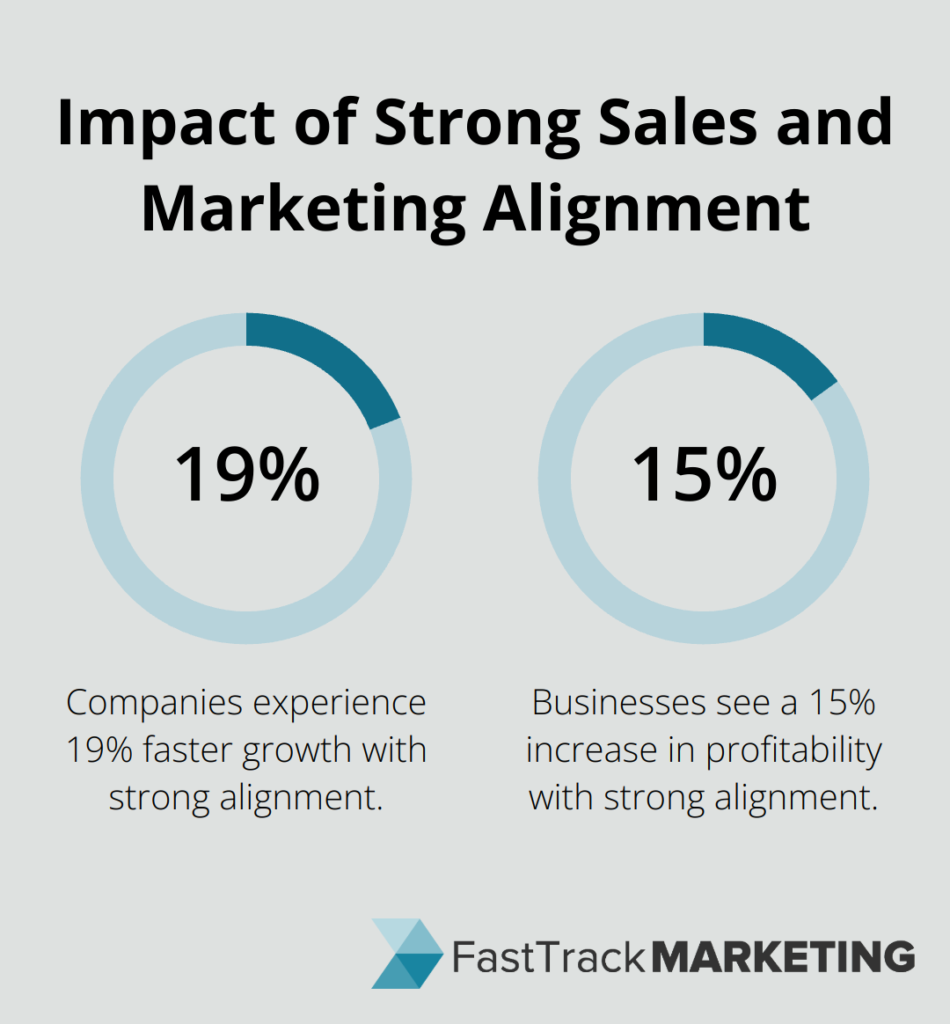
Aligning sales and lead generation can significantly boost business performance. Forrester reports that companies with strong sales and marketing alignment experience 19% faster growth and a 15% increase in profitability. This substantial improvement underscores the importance of a unified approach.
Healthcare providers have doubled their new patient acquisitions within months of aligning their sales and lead generation efforts. The secret lies in a cohesive strategy that ensures effective nurturing and follow-up for every lead.
Common Misalignments and Their Costs
Misalignment between sales and lead generation occurs more frequently than many realize. A Gartner study reveals that 62% of sales and marketing teams define qualified leads differently. This disconnect results in wasted efforts and missed opportunities.
One of the most expensive misalignments revolves around the “lead quality” debate. Marketing teams often celebrate high lead volumes, while sales teams complain about poor quality. This situation leads to finger-pointing and missed targets. When Sales and Marketing Aren’t Aligned, Both Suffer.
Strategies to Bridge the Gap
To address this issue, start by establishing a shared definition of a qualified lead. Implement lead scoring systems that both teams agree upon. This approach ensures that marketing passes only high-quality leads to sales, improving conversion rates and team morale.
Aligning messaging across all touchpoints (from ads to sales calls) builds credibility and shortens the sales cycle. When lead generation efforts promise one thing, but sales delivers another, trust erodes.
Implement a feedback loop where sales teams regularly share insights about lead quality and customer pain points with the lead generation team. This practice allows for continuous refinement of targeting and messaging strategies.
The Path Forward
These alignment strategies not only improve internal processes but also create a seamless experience for potential customers. In today’s competitive landscape, this advantage can make a significant difference. The next section will explore specific tools and technologies that facilitate this crucial alignment between sales and lead generation.
How to Bridge the Sales-Lead Generation Gap
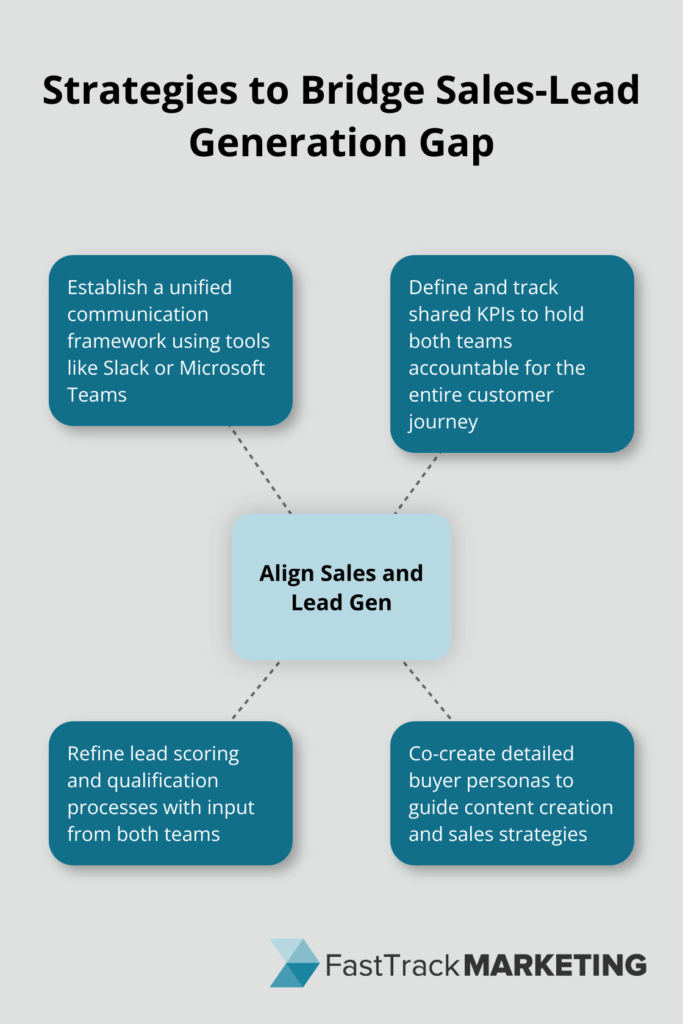
Establish a Unified Communication Framework
Create a centralized platform where sales and lead generation teams can share insights, updates, and feedback in real-time. Tools like Slack or Microsoft Teams (with dedicated channels for lead quality discussions, campaign updates, and win/loss analyses) prove effective. Schedule weekly cross-functional meetings to discuss ongoing campaigns, lead quality, and sales feedback.
Define and Track Shared KPIs
Implement a set of shared key performance indicators (KPIs) that hold both teams accountable. These might include:
- Lead-to-opportunity conversion rate
- Sales qualified lead (SQL) to closed-won ratio
- Average deal size
- Customer lifetime value
Focus on these shared metrics to invest both teams in the entire customer journey, from initial contact to closed deal and beyond.
Refine Lead Scoring and Qualification
Develop a lead scoring system that incorporates both demographic and behavioral data. Assign point values to actions like website visits, content downloads, and email engagement. Work with sales to determine which actions indicate buying intent most accurately.
Implement a lead qualification process that both teams approve. This could involve a series of qualifying questions or a specific set of criteria that leads must meet before sales receives them. Regularly review and update your lead qualification criteria using data-driven insights to stay responsive to market changes and customer behaviours.
Co-create Detailed Buyer Personas
Organize workshops where sales and lead generation teams collaboratively develop buyer personas. Sales teams provide valuable insights into customer pain points, objections, and decision-making processes. Lead generation teams contribute data on online behavior, content preferences, and engagement patterns.
Use these personas to guide content creation, lead nurturing sequences, and sales outreach strategies. Update them regularly based on new data and market changes.
The implementation of these strategies creates a seamless flow from lead generation to sales, resulting in higher conversion rates and increased revenue. Alignment requires continuous communication and adjustment (a process that never truly ends).
Now that we’ve explored strategies to align sales and lead generation, let’s examine the tools and technologies that facilitate this integration.
Tech Tools for Sales and Lead Gen Synergy
At Fast Track Marketing, we’ve observed how the right tech stack transforms sales and lead generation alignment. Let’s explore the game-changing tools that create seamless integration between these crucial functions.
CRM: The Backbone of Unified Customer Data
A robust Customer Relationship Management (CRM) system is essential for aligning sales and lead generation. These platforms centralize customer data, track interactions, and provide a 360-degree view of each lead’s journey.
Supercharging Efficiency with Marketing Automation
Marketing automation platforms streamline lead nurturing processes. These tools allow you to create personalized, multi-touch campaigns that guide leads through the funnel based on their behavior and preferences.
Some platforms stand out with its ability to trigger sales notifications when a lead takes a high-intent action (such as visiting a pricing page). This real-time alert system ensures that sales teams can act quickly, significantly improving conversion rates.
AI-Powered Lead Qualification: The Game Changer
AI-driven lead qualification tools revolutionize how we identify and prioritize leads. Some platforms use natural language processing to engage leads in human-like conversations, qualifying them before human intervention.
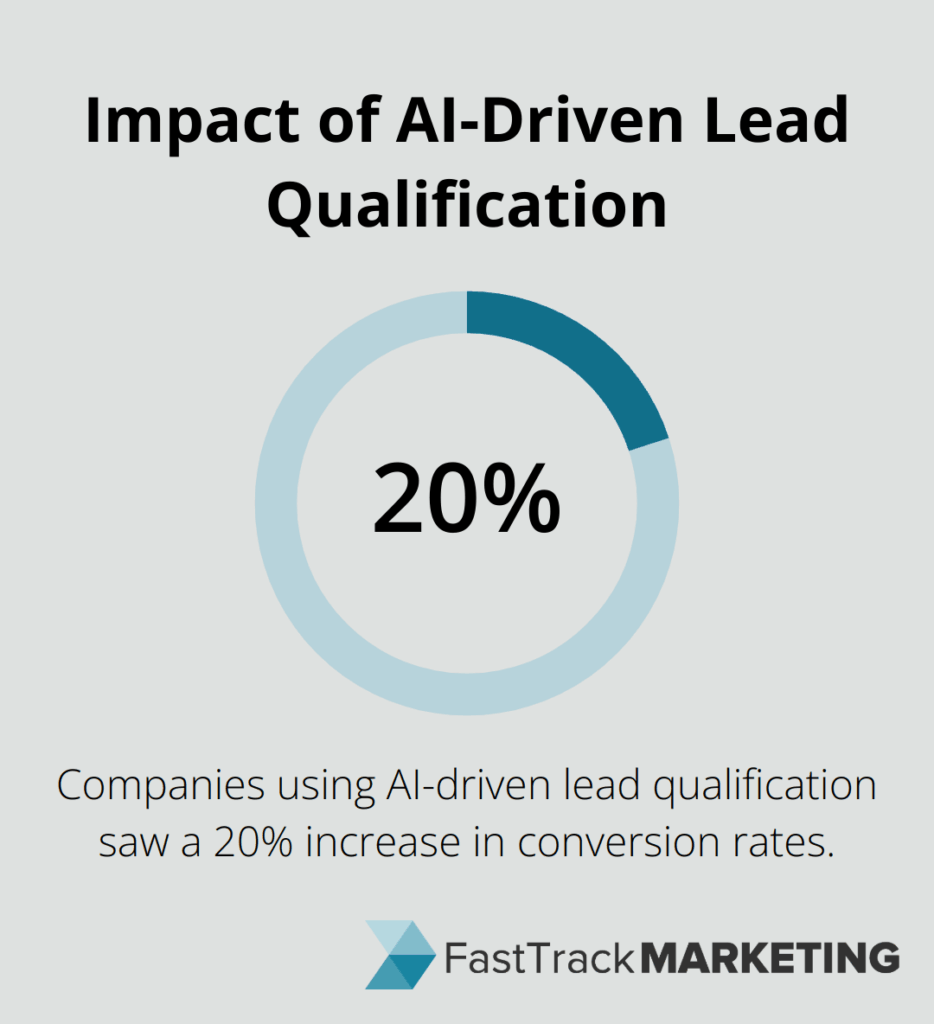
In fact, a study found that companies using AI-driven lead qualification saw an average increase of 20% in conversion rates. This impressive statistic demonstrates the potential of AI in enhancing sales processes.
Analytics: The Key to Continuous Improvement
Robust analytics and reporting software provide the insights needed to refine your sales and lead generation strategies continually. Google Analytics 4, with its enhanced machine learning capabilities, offers deeper insights into user behavior across devices and platforms.
For a more sales-focused analysis, tools like Tableau or Power BI can create custom dashboards that blend data from your CRM, marketing automation, and other sources. These visualizations make it easy for both sales and marketing teams to identify trends, spot bottlenecks, and make data-driven decisions.
Implementation and Integration
Implementing these tools requires careful planning and integration. Start by auditing your current tech stack and identifying gaps. Prioritize tools that offer seamless integration with your existing systems to avoid creating data silos.
The goal is not just to collect data, but to act on it. Regular cross-functional meetings to review insights from these tools can drive continuous improvement in your sales and lead generation alignment.
Final Thoughts
Sales and lead generation alignment transforms businesses. Companies that prioritize this synergy experience faster growth, increased profitability, and improved customer satisfaction. This alignment leads to efficient resource allocation, shorter sales cycles, and a stronger market position.
Successful alignment requires a culture of collaboration between sales and lead generation teams. Regular cross-functional meetings, shared dashboards, and open feedback loops foster this culture. Integrated technology solutions (such as CRMs and marketing automation platforms) facilitate data sharing and provide actionable insights.
We at Fast Track Marketing specialize in AI-driven marketing solutions that bridge the gap between sales and lead generation. Our comprehensive approach to digital marketing can help your organization achieve the alignment needed for sustainable growth. Take action today and watch your business transform as these two critical functions work in harmony.