

SEO and Lead Generation: A Powerful Combination
SEO and lead generation work hand in hand to drive qualified traffic and convert visitors into valuable leads.
In this post, we’ll explore the synergy between SEO and lead generation, and provide actionable strategies to boost your online presence and lead acquisition efforts.
Get ready to transform your digital marketing approach and supercharge your lead generation results.
How SEO and Lead Generation Work Together
The SEO-Lead Generation Connection
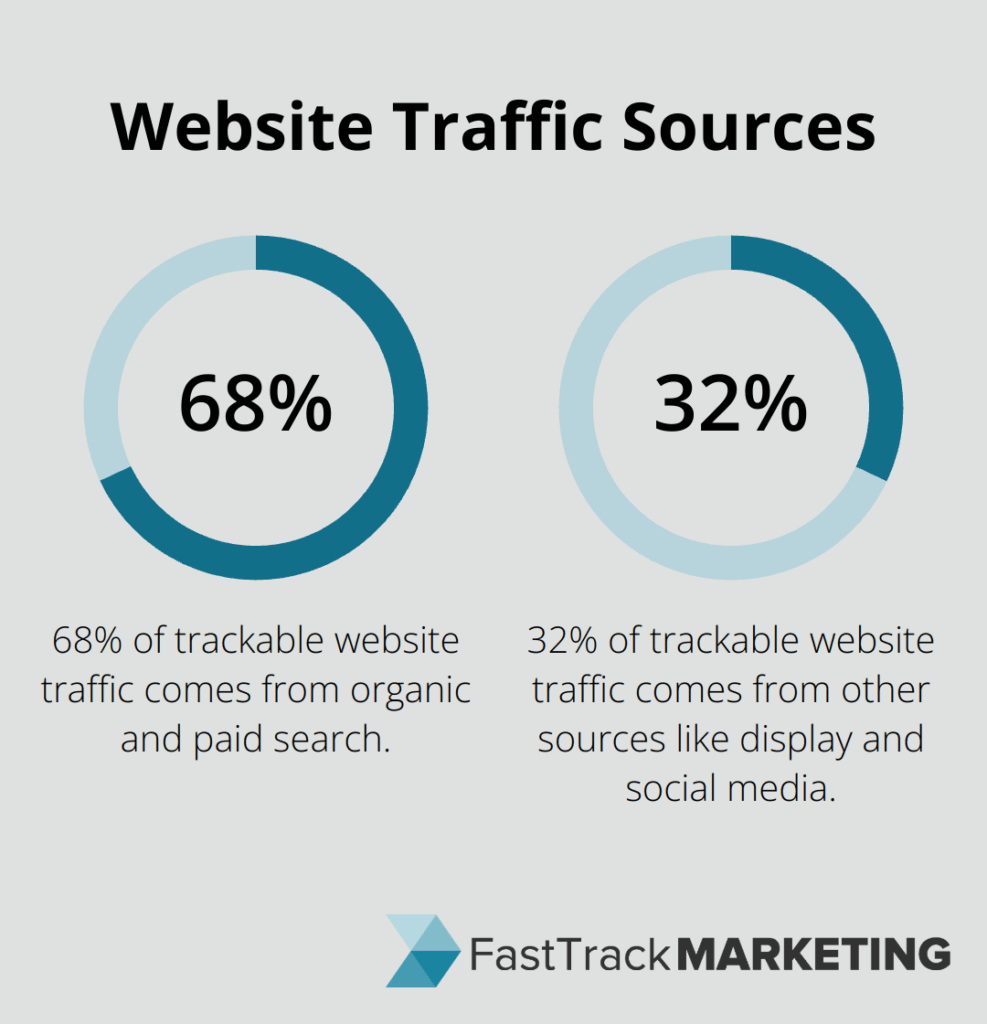
SEO and lead generation form a powerful alliance in digital marketing. When implemented correctly, they create a synergy that drives business growth. SEO isn’t just about ranking high on search engines; it attracts the right audience to your website. When you optimize for relevant keywords, you fish where the fish are. A study by BrightEdge reveals that 68% of all trackable website traffic is sourced from organic traffic and Paid Search, vastly exceeding all other channels, including Display and Social Media. This means that a significant portion of your potential leads actively search for solutions you provide.
SEO-driven traffic often yields high-quality results because it consists of users actively seeking information or solutions related to your products or services. These visitors have a higher likelihood of converting into leads and eventually customers.
Content: The Bridge Between SEO and Leads
Content serves as the linchpin that connects SEO and lead generation. High-quality, relevant content fulfills two crucial purposes:
- It helps you rank for targeted keywords, improving your visibility in search results.
- It provides value to your visitors, encouraging them to engage with your brand and enter your sales funnel.
A well-crafted blog post optimized for “AI marketing solutions” (a topic FastTrack Marketing specializes in) could attract potential clients searching for such services. Once on your site, this informative content builds trust and positions your brand as an authority, making visitors more likely to fill out a contact form or sign up for a newsletter.
Measuring SEO’s Impact on Lead Generation
To understand the effectiveness of your SEO efforts in lead generation, you need to track specific metrics. Here are some key performance indicators (KPIs) to monitor:
- Organic traffic growth: An increase indicates that your SEO efforts pay off.
- Conversion rate from organic traffic: This shows how many of your organic visitors turn into leads.
- Keyword rankings: Track your positions for target keywords to gauge your visibility for relevant searches.
- Time on site and bounce rate: These metrics can indicate the quality of your traffic and content engagement.
Tools like Google Analytics and Google Search Console provide invaluable insights for tracking these metrics. Many digital marketing agencies (including FastTrack Marketing) use these tools alongside proprietary analytics to offer comprehensive insights into SEO and lead generation performance.
Optimizing for Voice Search
As voice search continues to grow in popularity, optimizing for this medium becomes increasingly important for lead generation. Voice search statistics show that 40.7% of all voice search answers are pulled from a featured snippet on Google. Voice searches tend to be more conversational and question-based, so try to incorporate natural language and long-tail keywords into your content. This approach not only helps capture voice search traffic but also aligns with the way people naturally express their queries.
Now that we’ve explored the symbiosis between SEO and lead generation, let’s examine some effective SEO strategies specifically designed to boost your lead generation efforts.
How to Boost Lead Generation with SEO
SEO is a powerful tool for generating quality leads, not just for ranking high on search engines. At Fast Track Marketing, we focus on strategies that deliver measurable results. Here’s how you can use SEO to supercharge your lead generation efforts.
Target Keywords with High Buyer Intent
The foundation of effective SEO for lead generation lies in targeting keywords that signal purchase intent. These are often long-tail keywords that indicate a user is close to making a decision. For example, instead of targeting “healthcare marketing,” focus on “best AI healthcare marketing solutions for small clinics.” This specificity attracts users who are more likely to convert.
Tools like Google’s Keyword Planner or SEMrush help identify these high-intent keywords. Look for phrases that include words like “buy,” “services,” or “near me” (these often indicate a user is ready to take action).
Create Conversion-Optimized Landing Pages
After you identify your target keywords, create dedicated landing pages optimized for both search engines and conversions. These pages should address the specific need or question implied by the search query.
Your landing pages must load quickly – Google reports that 53% of mobile users abandon sites that take longer than three seconds to load. Include clear, compelling calls-to-action (CTAs) and keep forms short. A HubSpot study found that reducing the number of form fields from four to three can increase conversions by up to 50%.
Harness the Power of Local SEO
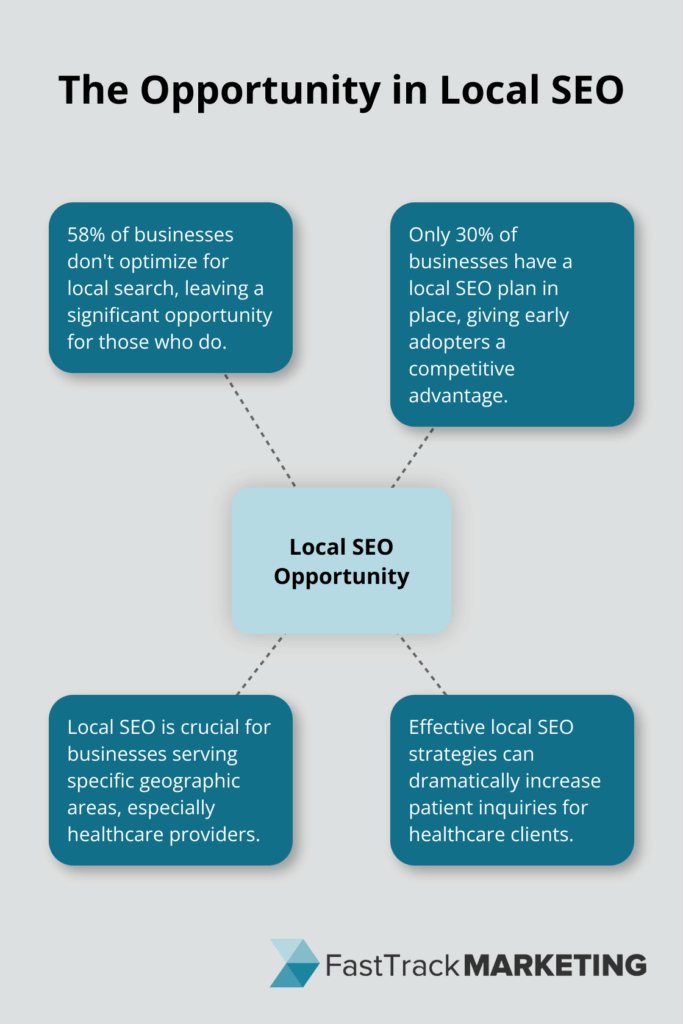
For businesses serving specific geographic areas, local SEO is a goldmine for lead generation. 58% of businesses don’t optimize for local search, and only 30% have a local SEO plan in place. Optimize your Google Business Profile, ensure your NAP (Name, Address, Phone) information is consistent across all online directories, and encourage satisfied patients to leave reviews – they boost your local SEO efforts.
Local SEO is particularly important for healthcare providers. Effective local SEO strategies can dramatically increase patient inquiries for healthcare clients.
Leverage Content Marketing for SEO and Leads
Content marketing serves as a bridge between SEO and lead generation. High-quality, relevant content helps you rank for targeted keywords and provides value to your visitors, encouraging them to engage with your brand.
Create informative blog posts, whitepapers, and case studies that address your audience’s pain points. Optimize this content for your target keywords and include clear CTAs to guide visitors towards becoming leads. Content marketing can establish thought leadership, generate high-quality leads, and build brand awareness.
Monitor and Adjust Your Strategy
SEO for lead generation is an ongoing process. Continuously monitor your performance using tools like Google Analytics and Google Search Console. These tools provide invaluable insights into your organic traffic, conversion rates, and keyword rankings.
Adjust your strategies based on this data and stay updated with the latest SEO trends. The digital landscape evolves rapidly, and staying ahead of the curve ensures your lead generation efforts remain effective.
As we move forward, it’s important to understand how these SEO strategies integrate with your overall lead generation funnel. Let’s explore how to align your SEO efforts with different stages of the buyer’s journey and leverage them to support other marketing channels.
How to Align SEO with Your Lead Funnel
Map Keywords to Buyer Stages
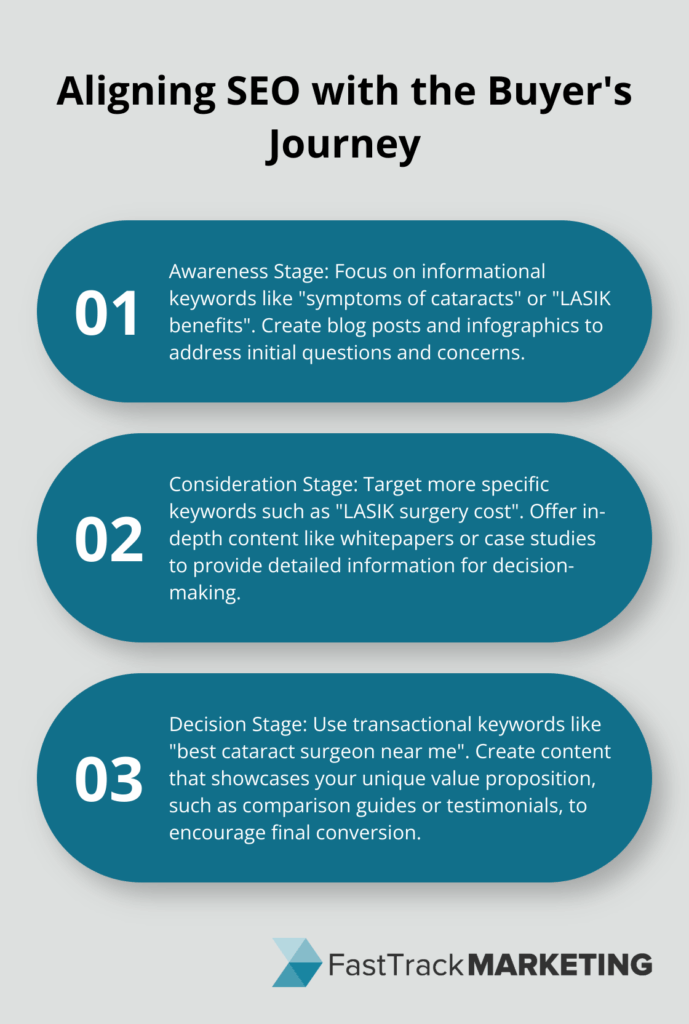
The first step to align SEO with your lead funnel is to map keywords to different stages of the buyer’s journey. For the awareness stage, focus on informational keywords. If you’re in the healthcare sector, target phrases like “symptoms of cataracts” or “LASIK benefits.” As prospects move down the funnel, shift to more specific, transactional keywords like “LASIK surgery cost” or “best cataract surgeon near me.”
This approach ensures that your content meets potential leads where they are in their decision-making process. It also helps you create a content strategy that guides prospects through each stage of the funnel, from initial awareness to final conversion.
Create Stage-Specific Content
After you map your keywords, create content that addresses the specific needs and questions of leads at each stage. For the awareness stage, blog posts and infographics work well. As leads move to consideration, offer more in-depth content like whitepapers or case studies. For the decision stage, create content that showcases your unique value proposition, such as comparison guides or testimonials.
Optimize each piece of content for its target keywords. This improves your search rankings and ensures that your content reaches the right audience at the right time.
Use SEO to Enhance Email Marketing
SEO can significantly improve your email marketing efforts. Use SEO to enhance your email marketing by defining your target audience, creating relevant and valuable content, optimizing your website for search, and collecting leads’ contact information. This alignment ensures consistency in messaging across all touchpoints and improves the relevance of your emails to subscribers’ interests.
Moreover, create landing pages optimized for email-specific keywords. For instance, if you run an email campaign about a new AI-driven healthcare solution, create a landing page optimized for “AI healthcare technology demo.” This page can serve as a destination for email clicks and also rank in search results, capturing additional leads.
Implement Technical SEO Best Practices
Don’t overlook the technical aspects of SEO when aligning with your lead funnel. Implement technical SEO best practices such as optimizing your website’s content, increasing page load speed, configuring permalinks, creating an XML Sitemap, and fixing any technical issues. These factors not only improve your search rankings but also enhance user experience, which can lead to higher conversion rates.
Try to implement schema markup on your pages (this structured data helps search engines understand your content better). For example, use FAQ schema for frequently asked questions or review schema for testimonials. This can lead to rich snippets in search results, which can increase click-through rates and attract more qualified leads.
Monitor and Adjust Your Strategy
SEO and lead generation are not “set it and forget it” tactics. Continuously monitor your performance using tools like Google Analytics and Google Search Console. These tools provide invaluable insights into your organic traffic, conversion rates, and keyword rankings.
Adjust your strategies based on this data and stay updated with the latest SEO trends. The digital landscape evolves rapidly, and staying ahead of the curve ensures your lead generation efforts remain effective.
Final Thoughts
SEO and lead generation form a powerful combination in digital marketing. These strategies work together to attract qualified traffic, convert visitors into leads, and ultimately grow businesses. Companies that align their SEO efforts with their lead generation funnel create a seamless journey for potential customers, from initial search to becoming valuable leads.
The future of SEO and lead generation in digital marketing continues to evolve. As search algorithms become more sophisticated and user behavior shifts, strategies must adapt. Voice search optimization, AI-driven content creation, and personalized user experiences will play increasingly important roles in the SEO and lead generation landscape.
We at Fast Track Marketing specialize in AI-driven marketing solutions tailored for the healthcare sector. Our approach combines cutting-edge SEO techniques with proven lead generation strategies to enhance online presence and boost client acquisition (especially for healthcare providers). Contact us today to learn how we can help you achieve measurable results in your digital marketing efforts.