

How to Use Content Marketing for Lead Generation
Content marketing for lead generation transforms casual website visitors into qualified prospects. Companies using strategic content approaches see 3x more leads than traditional advertising methods.
At Fast Track Marketing, we’ve helped businesses generate thousands of leads through targeted content strategies. The key lies in creating valuable resources that solve real problems while capturing contact information at the right moments.
Content Marketing Strategies That Generate Quality Leads
Educational content that solves specific problems outperforms promotional material by 300% in lead generation, according to HubSpot research. Companies that focus on pain point solutions rather than product features see dramatically higher conversion rates. The most effective approach creates comprehensive resources that address common industry challenges. Healthcare businesses should develop content around patient acquisition, regulatory compliance, or practice management issues. Manufacturing companies must focus on operational efficiency, safety protocols, or supply chain optimization topics.
Create Educational Content That Addresses Pain Points
Problem-focused content attracts prospects who actively search for solutions. Research shows that 54% of content marketers find early-stage educational content provides the most value for lead generation. Healthcare providers can create patient education guides, treatment comparison charts, or insurance navigation resources.

Manufacturing companies benefit from safety compliance checklists, equipment maintenance guides, or quality control frameworks. This content positions your business as a trusted advisor rather than just another vendor pushing products.
Develop Gated Content for Lead Capture
Gated content works when the value exchange feels fair to your audience. The Content Marketing Institute reports that 76% of marketers use gated content for lead capture, but success depends on strategic placement. Templates, calculators, and detailed guides perform best as gated assets because they provide immediate utility. Position gates after you demonstrate value through free content first. A healthcare practice management checklist or manufacturing safety audit template creates natural conversion opportunities. Email capture forms should request minimal information initially (just name and email address). Progressive profiling allows you to gather additional details through subsequent interactions.
Use Video Content to Increase Engagement and Conversions
Video content generates 1200% more shares than text and images combined, making it the strongest lead generation format available today. Tutorial videos that address specific pain points consistently outperform generic promotional content. Product demonstration videos that show real problem-solving scenarios convert better than static content. Healthcare providers should create patient education videos or treatment explanation content. Manufacturing companies benefit from safety training videos or equipment operation tutorials. Short-form videos under 3 minutes maintain highest engagement rates while longer educational content builds authority with serious prospects.
Content creation represents just the first step in effective lead generation. The real challenge lies in getting your valuable resources in front of the right audience through strategic distribution channels.
Content Distribution Channels for Maximum Lead Generation
Optimize Blog Content for Search Engine Visibility
Organic search generates 53% of all website traffic, making SEO optimization your primary distribution channel for lead generation content. DataReportal research shows 32.9% of internet users discover new brands through search engines, proving the massive opportunity that ranking well provides. Healthcare practices should target location-specific keywords like “physical therapy Brooklyn” or “dermatologist Miami” combined with problem-focused terms. Manufacturing companies need industry-specific search terms like “industrial safety compliance” or “equipment maintenance protocols.” Long-tail keywords convert 2.5x better than broad terms because they capture users with clear intent. Write content that targets informational searches first, then guide readers toward commercial intent pages through internal links.
Leverage Social Media Platforms for Content Amplification
Social media marketing enables marketers to generate more leads through strategic platform selection and content distribution. LinkedIn performs best for B2B lead generation with professional audiences who actively seek business solutions. Healthcare providers should focus on LinkedIn and Facebook where patients research medical information and connect with providers. Manufacturing companies see stronger results on LinkedIn and industry-specific forums where decision-makers gather. Post frequency matters significantly-74% of social media users prefer 1-2 brand posts daily rather than content streams that overwhelm them. Share educational content first, then promote gated resources after you build audience trust through value delivery.
Implement Email Marketing Campaigns with Valuable Content
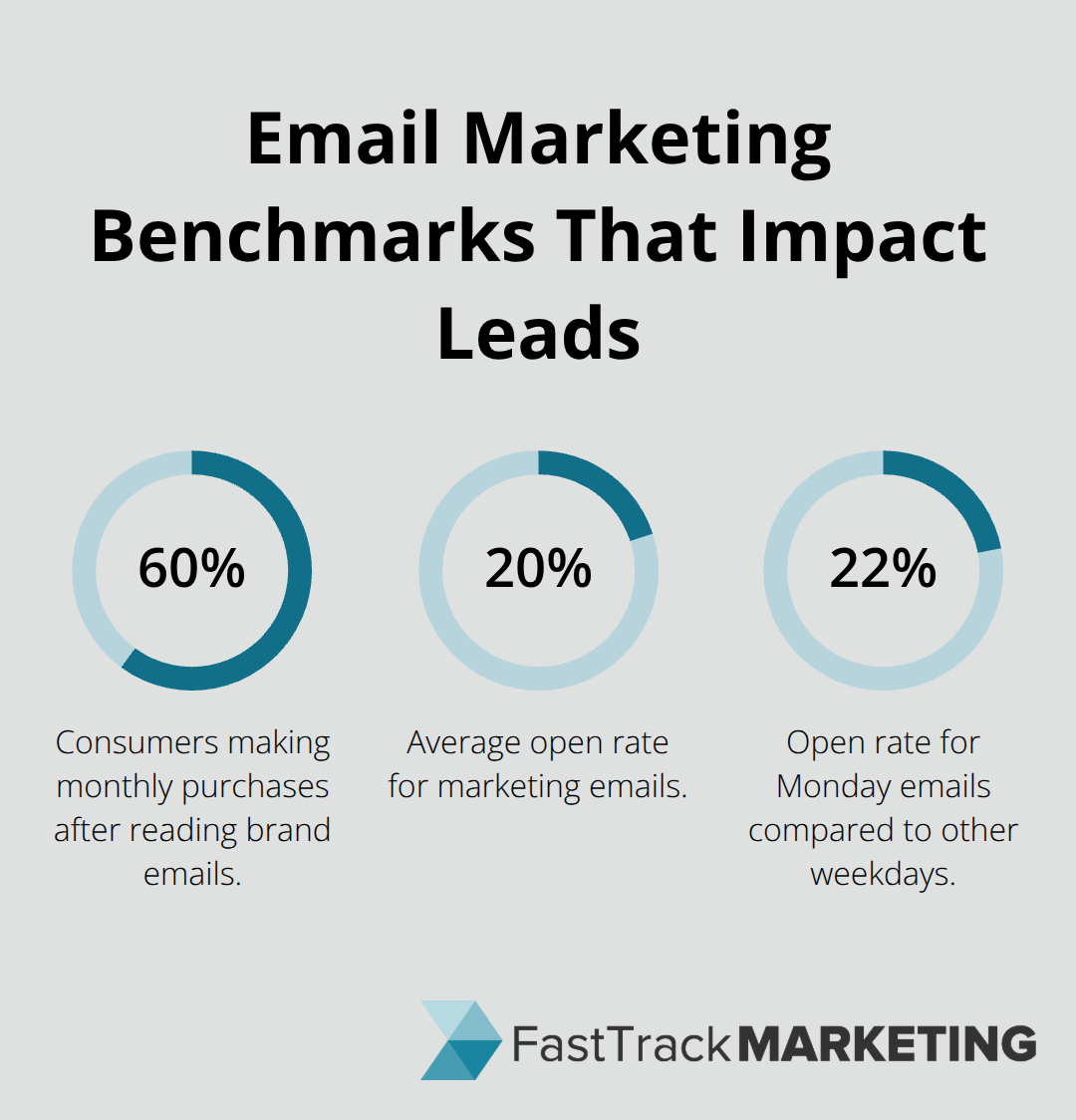
Email marketing delivers the highest ROI for lead nurturing, with 60% of consumers making monthly purchases after they read brand emails (according to Digital Commerce 360). However, only 20% of marketing emails get opened, making subject line optimization critical for success. Monday emails achieve 22% open rates compared to other weekdays according to Campaign Monitor research.
Send educational content weekly, promotional content monthly, and segment lists based on engagement levels and lead scores. Healthcare email campaigns should focus on patient education, appointment reminders, and health tips. Manufacturing newsletters work best with industry updates, safety alerts, and equipment maintenance advice. Progressive email sequences that gradually introduce more detailed content generate higher conversion rates than immediate sales pitches.
The foundation of successful content distribution requires more than just publishing across multiple channels. You need systematic measurement and optimization to identify which strategies generate the highest-quality leads for your specific business.
Measuring and Optimizing Content Marketing Performance
Content marketing performance measurement requires specific metrics that connect content consumption to actual lead generation. The most important metric is cost per lead, which averages $198.44 across industries, though 9% of organizations pay $10 or less per lead. Track conversion rates from each content piece through goal tracking that follows users from initial content engagement through email capture to final purchase. Manufacturing companies should monitor how equipment guides convert to consultation requests, while healthcare practices need to track patient education content that leads to appointment bookings.
Track Key Metrics for Lead Generation Success
Lead scoring systems separate high-value prospects from casual browsers who consume content without purchase intent. Companies that use detailed lead scoring see 77% higher lead generation ROI compared to basic tracking methods according to marketing automation research. Score leads based on content engagement depth, email opens, website return visits, and demographic fit. A prospect who downloads three manufacturing safety guides and visits pricing pages scores higher than someone who reads one blog post. Attribution tracking becomes essential when prospects interact with multiple content pieces before they convert. First-touch attribution shows which content attracts prospects initially, while last-touch reveals what drives final conversions.
Analyze Content Performance and User Behavior
Heat maps and user session recordings reveal exactly how prospects interact with your content and where they abandon the conversion process. Session recordings show whether prospects scroll through entire guides or exit after reading headlines, while heat maps identify which call-to-action buttons get clicked most frequently. Analytics data should drive content calendar decisions through identification of which topics generate the most qualified leads rather than just the highest traffic volumes. Companies that focus on lead quality over traffic volume see 40% better conversion rates within six months.
Test and Refine Content Strategies Based on Data
A/B testing different content formats produces measurable improvements in lead generation rates. Test video tutorials against written guides, long-form content against shorter pieces, and different gate placements for downloadable resources. Companies that systematically test content variations see improvements in conversion rates through scientific comparison methods. Track essential metrics like open rates to measure campaign effectiveness. Multi-touch attribution provides the complete picture through weighting each content interaction in the conversion path. This data reveals which content combinations work best for different prospect segments and industries.
Final Thoughts
Content marketing for lead generation delivers measurable results when you combine educational content creation with strategic distribution and systematic optimization. Companies that implement comprehensive content strategies see 300% better lead generation performance compared to traditional advertising approaches. The most successful businesses focus on solving specific pain points through valuable resources rather than pushing promotional messages.
Educational content that addresses real problems consistently outperforms generic marketing materials in converting prospects to qualified leads. Consistent content creation and distribution across multiple channels amplifies your reach and builds authority with target audiences. Regular publishing schedules combined with strategic SEO optimization and social media amplification create compound growth effects that increase lead volume over time.
Data-driven optimization separates high-performing content strategies from mediocre efforts. Companies that track conversion metrics, analyze user behavior, and test different content formats achieve significantly better ROI from their marketing investments (with some organizations paying as little as $10 per lead). Fast Track Marketing helps businesses implement these proven strategies to generate more qualified leads through targeted content approaches.