

How to Generate Leads with Digital Marketing
Digital marketing lead generation drives business growth by converting prospects into paying customers. Companies using strategic lead generation see 133% higher revenue compared to those without structured approaches.
We at Fast Track Marketing help businesses transform their marketing efforts into measurable results. This guide covers proven strategies, essential tools, and optimization techniques that generate consistent leads.
Understanding Lead Generation in Digital Marketing
What Qualifies as a High-Quality Lead
High-quality leads share three characteristics: they match your ideal customer profile, demonstrate genuine interest in your solution, and possess decision-making authority or influence. HubSpot research shows that companies focusing on lead quality over quantity see 9.3 times higher revenue compared to those chasing volume.
A quality lead actively engages with your content, downloads resources, requests demos, or asks specific questions about pricing and implementation. These prospects show clear buying signals rather than passive browsing behavior.
The Lead Generation Funnel and Conversion Process
The lead generation funnel transforms strangers into customers through four stages: awareness, interest, consideration, and decision. Marketing leads often fail to convert because businesses don’t nurture them properly through each stage.
Awareness stage leads consume educational content like blog posts and videos. Interest stage leads download whitepapers or subscribe to newsletters. Consideration stage leads request case studies or attend webinars. Decision stage leads schedule consultations or request proposals.
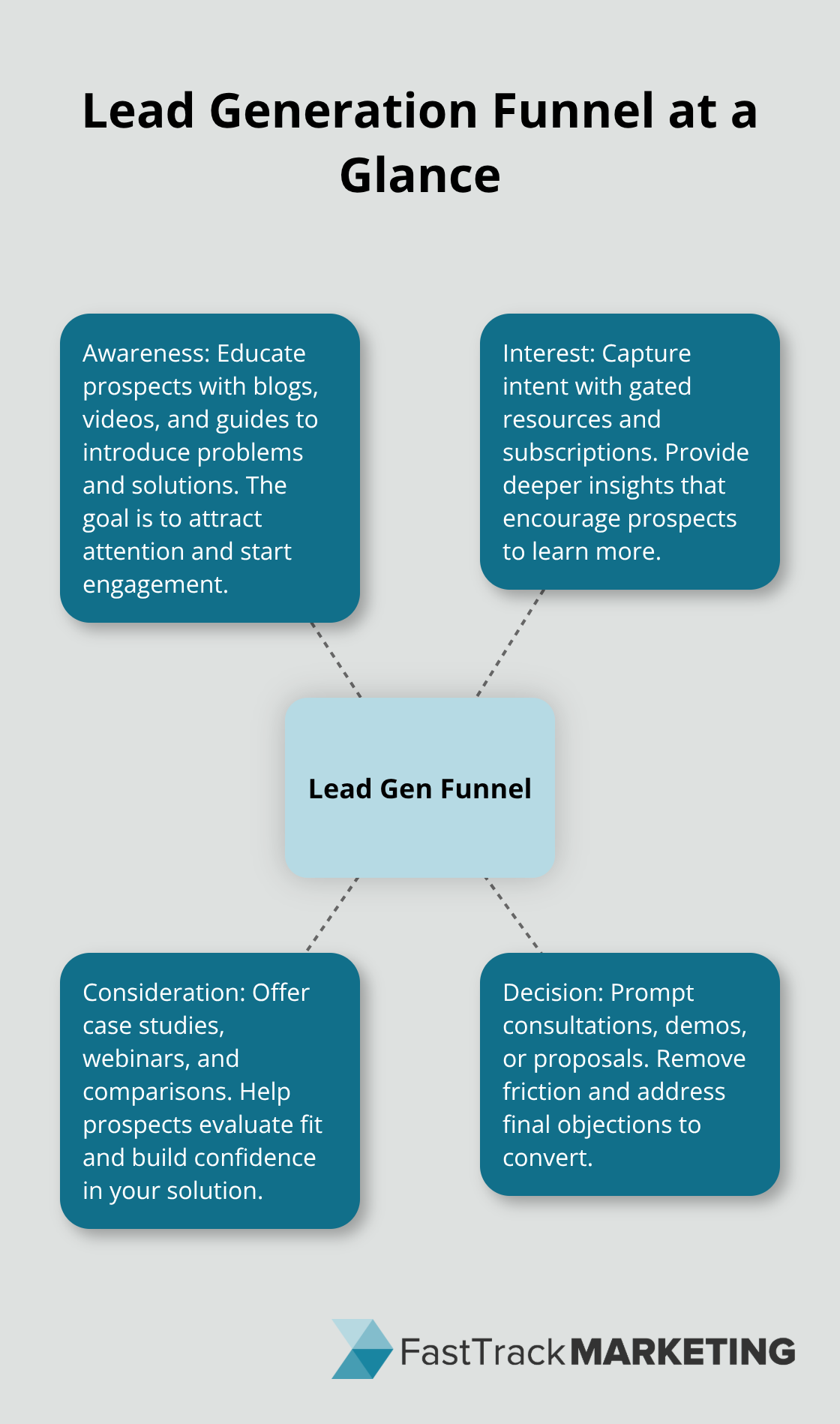
Each stage requires different content and touchpoints to move prospects forward effectively. The transition from one stage to the next depends on strategic content delivery and timely follow-up.
Key Metrics to Track Lead Generation Success
Track cost per lead, conversion rate from lead to customer, and lead-to-close time as primary metrics. To find your lead conversion rate, divide the number of converted leads by the total number of leads, then multiply by 100.
Monitor lead source performance to identify which channels generate the highest-converting prospects. Email marketing produces leads at $42 per acquisition while social media costs $58 per lead on average (based on industry benchmarks).
Website conversion rates should exceed 2.35% to match industry benchmarks, with landing pages converting at 5.31% when optimized properly. These metrics provide the foundation for evaluating which digital marketing strategies deliver the strongest results for your lead generation efforts.
Proven Digital Marketing Strategies for Lead Generation
Search Engine Optimization Drives High-Quality Organic Traffic
Search engine optimization delivers the highest-quality leads because prospects actively search for solutions you offer. Companies that invest in SEO benefit from organic search traffic, as 83 percent of search engine traffic comes from SEO compared to 17 percent from paid search. Target long-tail keywords with commercial intent like “best software for small business accounting” rather than generic terms like “accounting software.”
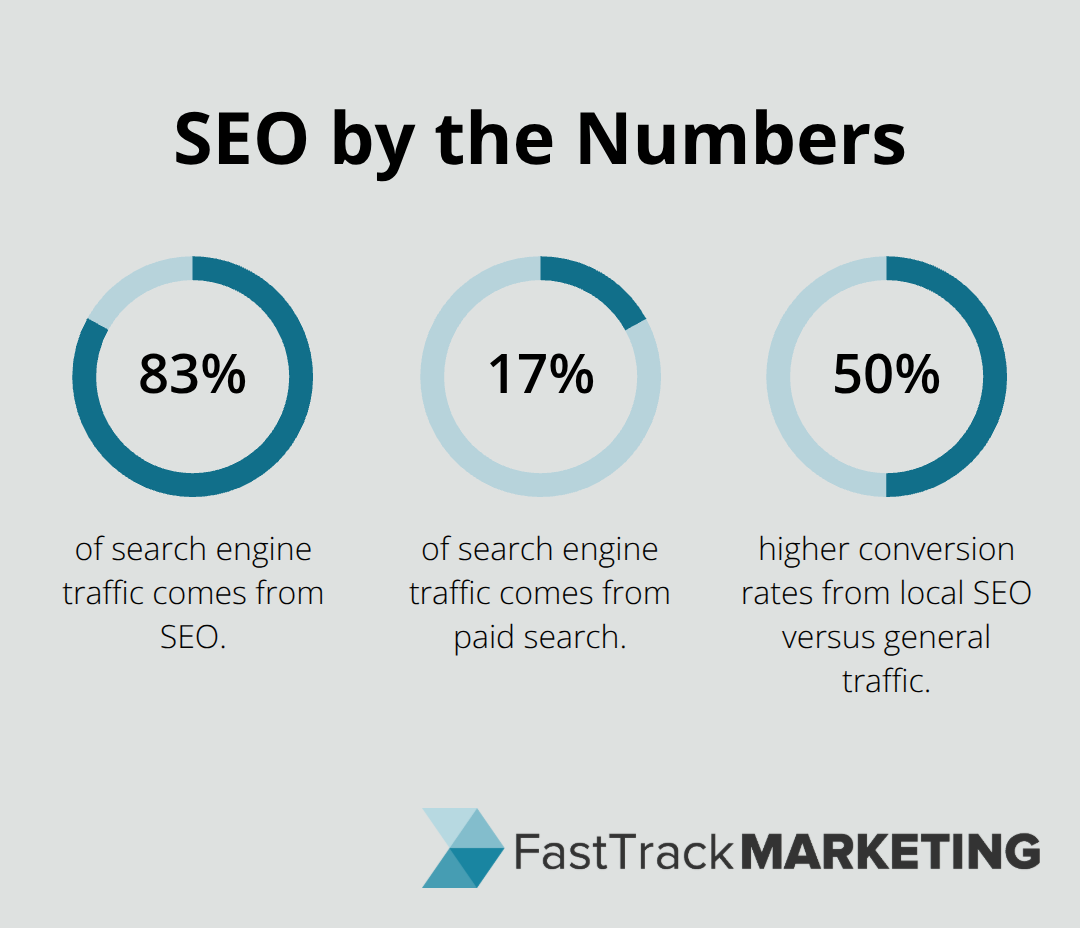
Create location-specific pages if you serve multiple markets, as local SEO generates leads with 50% higher conversion rates than general traffic. Focus on keywords that indicate purchase intent and optimize your content to answer specific questions your prospects ask during their research phase.
Pay-Per-Click Advertising Demands Strategic Budget Allocation
Google Ads generates immediate visibility but requires precise targeting and continuous optimization. Businesses earn $2 for every $1 spent on Google Ads when campaigns target high-intent keywords with conversion-focused pages. Focus your budget on exact match keywords during business hours when decision-makers actively search for solutions.
Exclude broad match terms that drain budgets without generating qualified leads. Test responsive search ads against expanded text ads to identify which format produces lower cost-per-acquisition rates for your specific industry. Monitor your quality scores daily and adjust bids based on performance data rather than assumptions.
Content Marketing Outperforms Traditional Advertising Methods
Content marketing costs 62% less than outbound marketing while generating more than three times as many leads. Publish weekly blog posts that address specific customer pain points rather than promotional content about your services. Educational content builds trust and positions your business as an industry authority.
Webinars convert leads at 20-40% rates when they provide actionable insights instead of sales presentations. Create downloadable resources like checklists and templates that require email registration, as these lead magnets capture prospects in the consideration stage of your funnel.
Social Media Marketing Amplifies Content Reach
Social media platforms expand your content’s reach and create direct engagement opportunities with prospects. LinkedIn generates 89% of B2B leads for companies that maintain active profiles and share industry insights regularly. Post valuable content consistently rather than sporadic promotional messages that prospects ignore.
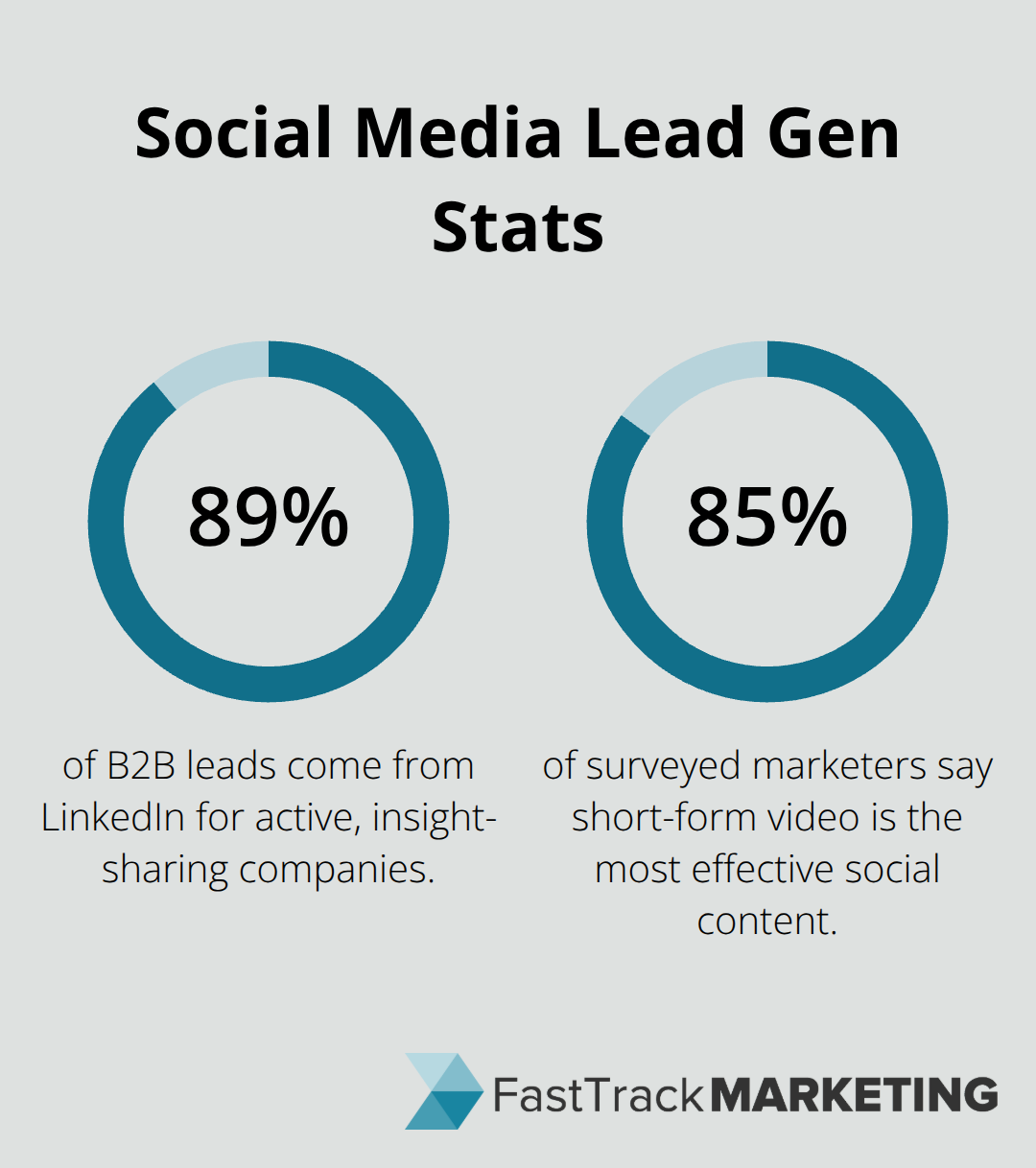
Video content performs exceptionally well across all platforms, generating 1200% more shares than text and images combined. Short-form videos rank as the most effective social media content according to 85% of surveyed marketers. These proven techniques work together to create a comprehensive approach that maximizes web lead generation potential across multiple channels.
Tools and Technologies for Effective Lead Generation
Marketing Automation Platforms Transform Lead Nurturing
Marketing automation platforms convert lead nurturing from manual tasks into systematic processes that convert prospects consistently. Companies that use automation see a 451% increase in qualified leads according to research data, but success depends on proper integration with customer relationship management systems.
The most effective approach connects your automation platform directly to your CRM to track prospect behavior from first website visit through final purchase. Set up automated email sequences that trigger based on specific actions like resource downloads or pricing page visits. These sequences should deliver relevant content at precise intervals rather than generic messages that prospects delete immediately.
CRM Integration Streamlines Lead Management
Customer relationship management systems track every prospect interaction and identify the hottest leads for immediate follow-up. Proper CRM integration eliminates data silos between marketing and sales teams, which increases conversion rates according to industry benchmarks.
Configure your CRM to score leads automatically based on engagement levels and demographic fit. High-scoring leads receive immediate sales attention while lower-scoring prospects enter nurture campaigns. This systematic approach prevents qualified prospects from falling through cracks in your sales process.
Landing Page Optimization Requires Continuous Testing
Pages that focus on one primary call to action convert around 13.5% on average, whereas pages with five or more links only convert approximately 10.5%. Test headline variations, button colors, and form lengths systematically through A/B testing rather than making changes based on opinions or assumptions.
Reduce form fields to essential information only, as each additional field decreases conversion rates on average. Mobile-optimized pages perform better since website traffic increasingly comes from mobile devices.
Analytics Platforms Reveal Performance Data
Analytics platforms provide the performance data needed to identify which traffic sources generate the highest-converting leads and which campaigns waste budget on unqualified prospects. Google Analytics 4 tracks the complete customer journey from initial awareness through conversion, while specialized lead tracking systems monitor phone calls and form submissions.
Monitor cost per lead by source weekly to shift budget toward channels that deliver qualified prospects at lower acquisition costs. Heat mapping reveals exactly where visitors click and scroll on your pages, exposing optimization opportunities that increase conversion rates without additional traffic investment.
Final Thoughts
Digital marketing lead generation success requires multiple strategies that complement each other systematically. SEO delivers the highest-quality prospects who actively search for your solutions, while PPC provides immediate visibility when you optimize campaigns correctly. Content marketing costs 62% less than traditional methods while it generates three times more leads through educational resources and webinars.
Marketing automation platforms increase qualified leads by 451% when you integrate them properly with CRM systems. Landing page optimization through continuous A/B testing improves conversion rates significantly, especially when forms collect only essential information. Analytics platforms reveal which traffic sources generate the highest-converting leads and which campaigns waste budget on unqualified prospects.
Start with one primary strategy like SEO or content marketing, then expand systematically based on performance data (monitor cost per lead by source weekly). Track conversion rates from lead to customer rather than vanity metrics that don’t impact revenue. We at Fast Track Marketing help businesses transform their marketing efforts into measurable results through strategic lead generation approaches.