

How to Create Effective Lead Generation FB Ads
Facebook Lead Generation Ads are a powerful tool for healthcare providers looking to attract new patients. These ads offer a streamlined way to collect valuable information from potential leads directly within the Facebook platform. In this post, we’ll share our top strategies for creating compelling ads that drive results and help you grow your practice.
What Are Facebook Lead Generation Ads?
Definition and Functionality
Facebook Lead Generation Ads are a powerful tool for healthcare providers to expand their patient base. These ads allow potential patients to submit their contact information directly within the Facebook platform, without leaving the app or website.
When a user clicks on a lead gen ad, they see a form pre-populated with information from their Facebook profile. This streamlined process makes it easy for interested individuals to share their details, which significantly increases the likelihood of conversion.
Benefits for Healthcare Providers
Facebook Lead Gen Ads offer several advantages for healthcare providers:
- Higher conversion rates: The simplified form-filling process leads to more completed submissions.
- Better quality leads: Targeted advertising ensures you reach the most relevant audience.
- Cost-effective: You only pay for the leads you receive (making it a budget-friendly option).
- Mobile-friendly: These ads are optimized for mobile devices, where most Facebook users spend their time.
Key Components of Successful Campaigns
To create effective Facebook Lead Generation Ads, focus on these elements:
- Compelling visuals: Use high-quality images or videos that resonate with your target audience. (For example, a dental practice might showcase before-and-after smile transformations.)
- Clear value proposition: Communicate the benefit of submitting the form clearly. This could be a free consultation, a health assessment, or an exclusive offer for new patients.
- Targeted audience selection: Utilize Facebook’s robust targeting options to reach the right demographic. (For instance, a pediatric clinic might target parents within a specific age range and geographic location.)
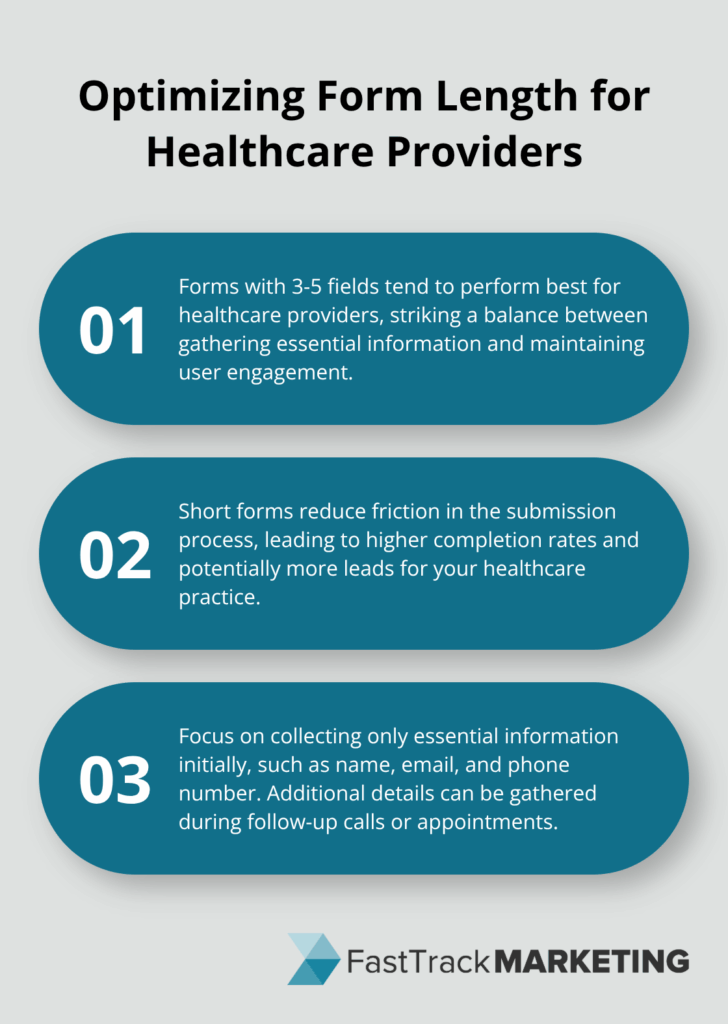
- Optimized form fields: Keep your form short and sweet. Ask only for essential information to minimize friction. Forms with 3-5 fields tend to perform best for healthcare providers.
- Strong call-to-action: Use action-oriented language that encourages users to take the next step. “Book Your Free Consultation Now” is more effective than a generic “Learn More”.
Measuring Success
To ensure the effectiveness of your Facebook Lead Generation Ads, it’s important to track key metrics. These may include:
- Cost per lead
- Conversion rate
- Lead quality
- Return on ad spend (ROAS)
By measuring key metrics for Facebook Lead Generation Ads, you can continuously refine your ad strategy and improve your results over time.
Now that we understand what Facebook Lead Generation Ads are and their key components, let’s explore how to craft compelling ad content that will capture the attention of potential patients and drive conversions.
How to Craft Compelling Ad Content for Healthcare
Know Your Audience Inside Out
Start with a deep analysis of your target audience’s demographics, interests, and pain points. Use Facebook’s Audience Insights tool to gather aggregate information about people connected to your Page and people on Facebook. For example, if you’re a dermatologist targeting acne sufferers, focus on the 18-34 age group and their skincare concerns.
Create Scroll-Stopping Visuals
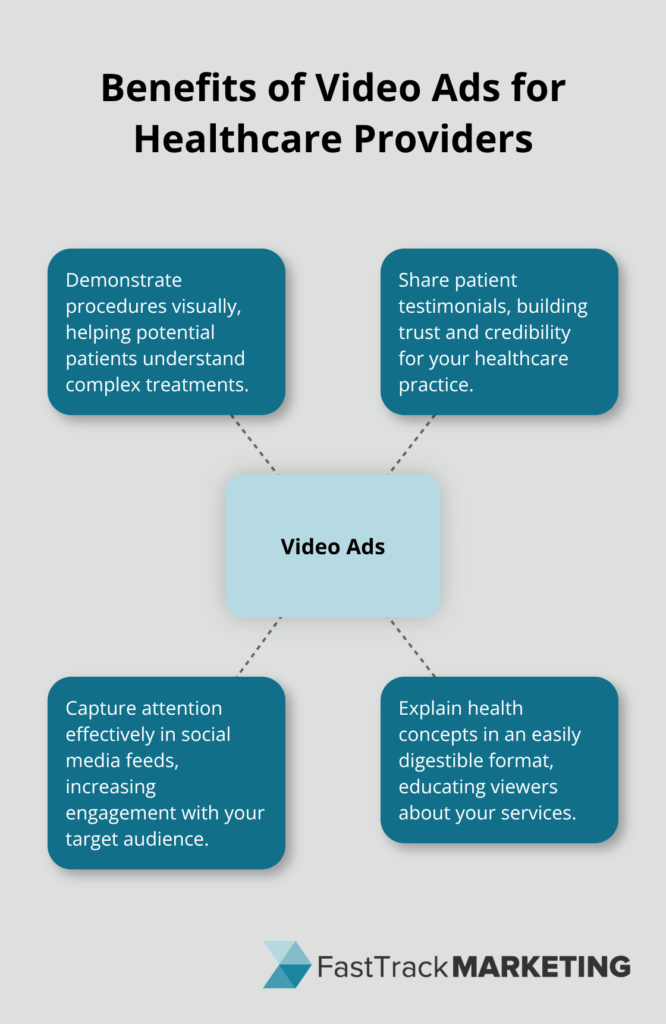
Your ad’s visual element is the first thing users see. Use high-quality images or videos that immediately grab attention. For healthcare providers, before-and-after photos, short video testimonials, or infographics showcasing treatment benefits work well. Video ads can be particularly effective in demonstrating procedures or sharing patient testimonials.
Write Headlines That Pack a Punch
Your headline should address the user’s problem or desire in 5-7 words. Make it specific and benefit-driven. For instance, “Achieve Your Dream Smile in Just 6 Months” is more compelling than “Orthodontic Services Available”.
Craft Persuasive Ad Copy
In the body of your ad, focus on the unique value proposition of your healthcare service. Use simple, jargon-free language that speaks directly to the patient’s needs. Highlight what sets you apart from other providers.
Choose a Call-to-Action That Converts
Your call-to-action (CTA) should be clear, action-oriented, and create a sense of urgency. “Book Your Free Consultation Now” or “Get Your Personalized Treatment Plan” are effective CTAs for healthcare providers. A/B test different ad formats to see which performs best with your audience.
The key to crafting compelling ad content is to focus on the patient’s needs and how your healthcare service can improve their life. Keep testing and refining your ads based on performance data to continuously improve your results. Now that you’ve mastered creating compelling content, let’s move on to optimizing your lead generation form for maximum conversions.
How to Optimize Your Lead Generation Form
Simplify Your Form
A short, simple form converts more leads. When it comes to form length, aim for 3-5 fields. Ask only for essential information: name, email, and phone number. Collect additional details during follow-up calls or appointments.

Example for a dental practice:
- First Name
- Last Name
- Email Address
- Phone Number
- Preferred Service (dropdown menu)
Utilize Smart Field Types
Facebook’s pre-fill feature automatically populates fields with user profile information. This reduces friction and increases form completion rates. For custom fields, use appropriate input types:
- Dropdowns for multiple choice questions
- Date pickers for appointment scheduling
- Radio buttons for yes/no questions
Qualify Leads Strategically
Include one or two questions to qualify leads (while maintaining a short form). This helps prioritize follow-ups and tailor responses. Key criteria for sales qualification include budget and authority. For example, a weight loss clinic might ask:
“When do you want to start your weight loss journey?”
- Immediately
- Within the next month
- Just exploring options
Ensure Privacy and Compliance
Healthcare providers must prioritize data privacy. State clearly how you’ll use collected information and link to your privacy policy. For HIPAA compliance, avoid asking for sensitive health information in your lead generation form. Use general questions and collect detailed medical history during in-person consultations.
Implement Continuous Testing
Test different form layouts, questions, and CTAs to improve performance. Use Facebook’s A/B testing feature to compare variations and identify what resonates with your audience. Monitor metrics like completion rate and lead quality to guide your optimization efforts.
Final Thoughts
Facebook Lead Generation Ads provide healthcare providers with a powerful tool to attract potential patients. We at Fast Track Marketing have seen these ads drive impressive results for our clients in the healthcare sector. Our team specializes in creating effective lead generation FB ads that comply with industry regulations while delivering measurable outcomes.
Fast Track Marketing offers AI-driven marketing solutions tailored for healthcare professionals. We help optimize ad content, refine targeting strategies, and maximize return on investment (all while navigating the complexities of digital advertising in healthcare). Our expertise allows healthcare providers to focus on patient care while we handle their online presence and client acquisition efforts.
Don’t let digital marketing challenges hold your practice back. Fast Track Marketing supports you in harnessing the full potential of Facebook Lead Generation Ads. Contact us today to learn how we can help your practice thrive through targeted and effective lead generation campaigns.