

Building an Effective Email Marketing Funnel
Email marketing funnels are powerful tools for nurturing leads and driving conversions. At Fast Track Marketing, we’ve seen firsthand how a well-crafted funnel can transform a business’s email strategy.
In this post, we’ll break down the key components of an effective email marketing funnel and share practical tips to optimize each stage. Get ready to supercharge your email campaigns and boost your bottom line.
What Is an Email Marketing Funnel?
The Essence of Email Marketing Funnels
An email marketing funnel represents a strategic approach to guide potential customers from initial awareness to final purchase and beyond. This method can dramatically boost conversion rates and customer loyalty.
Key Stages of an Email Marketing Funnel
The funnel typically consists of four key stages: Awareness, Consideration, Conversion, and Retention. Each stage requires tailored content to move subscribers closer to a purchase decision.
Awareness Stage
In the Awareness stage, we introduce our brand and offerings. This might involve sending welcome emails or sharing educational content about industry trends. For example, a healthcare provider might send an email about the latest advancements in telemedicine.
Consideration Stage
The Consideration stage provides more detailed information about products or services. This could include case studies, comparison guides, or free trials. A dental practice, for instance, might share before-and-after photos of teeth whitening treatments.
Conversion Stage
During the Conversion stage, we turn interested subscribers into paying customers. This often involves sending targeted promotions or limited-time offers. A physical therapy clinic could offer a discount on an initial consultation to encourage bookings.
Retention Stage
The Retention stage builds long-term relationships. Here, we send personalized product recommendations, exclusive deals for repeat customers, or request feedback to improve our services.
Mirroring the Customer Journey
An effective email marketing funnel reflects the customer’s decision-making process. It acknowledges that not all subscribers are ready to buy immediately and provides value at each stage of their journey.
For example, a new subscriber might receive a series of educational emails before we present a product offer. This approach builds trust and positions a brand as an authority in its field.
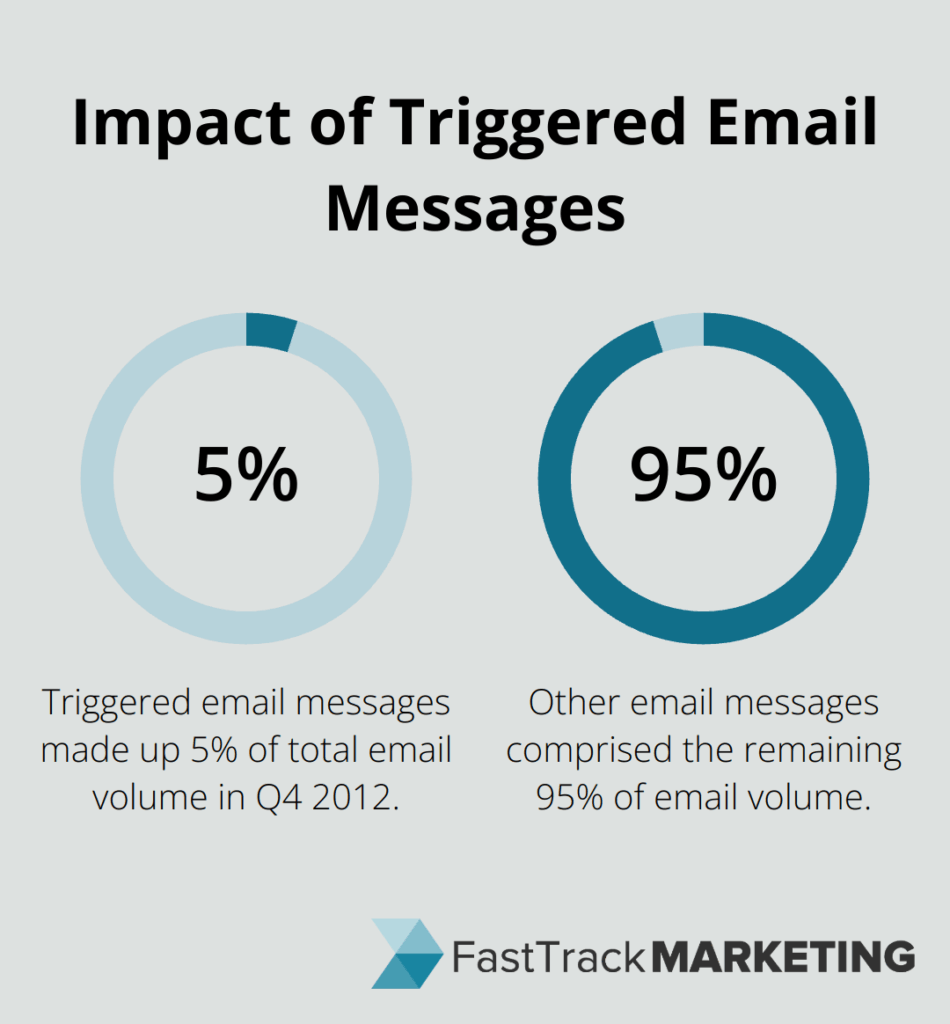
A study by Epsilon found that triggered email messages accounted for 5% of total email volume in Q4 2012. This underscores the importance of sending the right message at the right time in the customer journey.
Now that we understand the structure and importance of an email marketing funnel, let’s explore how to craft compelling content for each stage to maximize engagement and conversions.
How to Craft Compelling Content for Each Funnel Stage
Awareness Stage: Spark Interest and Educate
The awareness stage introduces your brand and provides value to new subscribers. Educational content excels here. A dental practice might send an email series on “5 Secrets to a Brighter Smile” or “The Truth About Teeth Whitening.” These topics address common concerns and position your brand as a helpful resource.
Lead magnets attract new subscribers effectively. Offer a free e-book, webinar, or checklist that solves a specific problem for your target audience. A physical therapy clinic could provide a downloadable guide on “10 Exercises to Relieve Lower Back Pain” in exchange for an email address.
Consideration Stage: Showcase Your Expertise
As subscribers enter the consideration stage, they evaluate their options. This stage allows you to demonstrate why your product or service stands out. Product comparisons and targeted offers work well here.
A healthcare provider might send an email comparing their telemedicine services to traditional in-person visits, highlighting the convenience and cost-effectiveness of virtual consultations. Include specific benefits, such as reduced wait times or access to specialists from home.
Case studies and testimonials build trust and credibility at this stage. Share success stories from satisfied clients. A weight loss clinic could feature before-and-after photos along with detailed accounts of clients’ journeys to inspire and motivate potential customers.
Conversion Stage: Drive Action
The conversion stage transforms interested subscribers into paying customers. Your content should create urgency and provide a clear path to purchase. Use persuasive copy that addresses potential objections and emphasizes your offering’s unique value.
A cosmetic dentistry practice might send an email with the subject line “Transform Your Smile in Time for Summer” and include a limited-time discount on veneers. The email should feature compelling before-and-after images, a breakdown of the procedure, and a prominent call-to-action button to schedule a consultation.
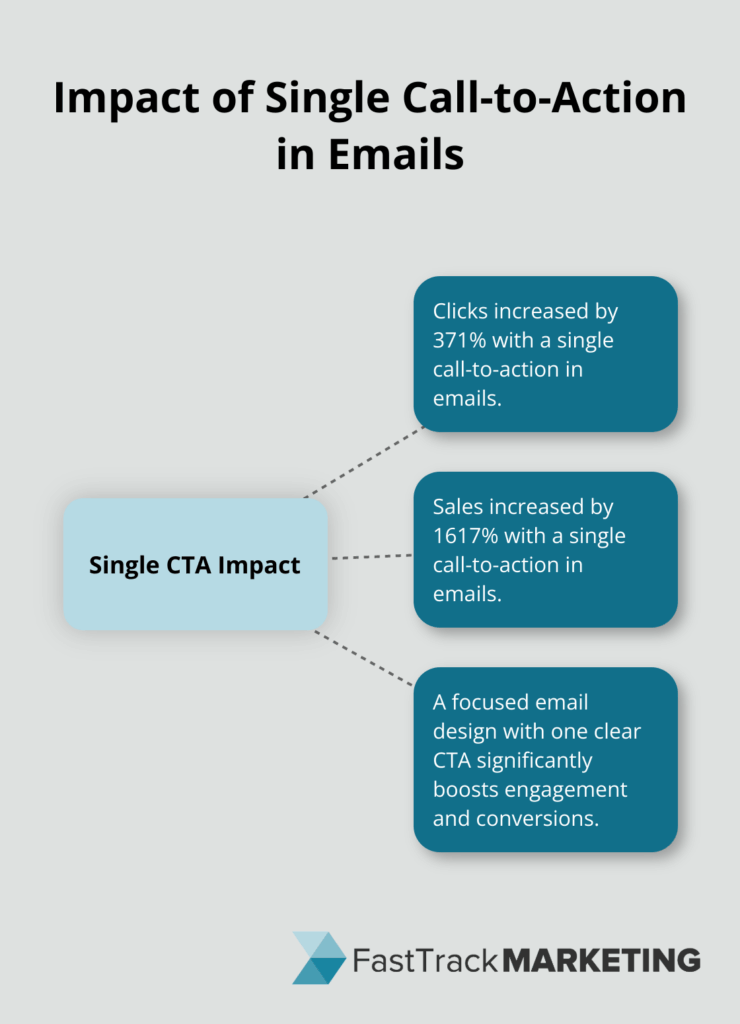
A study by WordStream found that emails with a single call-to-action increased clicks by 371% and sales by 1617%. Keep your message focused and make it easy for subscribers to take the next step.
Retention Stage: Foster Loyalty
Once a subscriber becomes a customer, your focus shifts to building a long-term relationship. Personalized recommendations based on past purchases or interactions can increase acquisition, retention, and long-term loyalty.
A physical therapy clinic could send tailored exercise plans to clients based on their specific conditions. Or, a dental practice might offer exclusive deals on teeth whitening to patients who recently completed orthodontic treatment.
Ask for feedback regularly. This approach shows that you value your customers’ opinions and provides valuable insights for improving your services. A simple survey about their experience with your practice can foster loyalty and identify areas for improvement.
The next chapter will explore how to optimize your email marketing funnel for maximum effectiveness, including segmentation strategies, A/B testing, and automation techniques.
How to Optimize Your Email Marketing Funnel
Segment Your Audience for Targeted Messaging
Segmentation forms the foundation of effective email marketing. You can deliver more relevant content that resonates with each group by dividing your audience based on specific criteria.
For healthcare providers, segmentation might include factors like:
- Patient type (new vs. returning)
- Treatment history
- Age group
- Geographic location
A dental practice could segment patients who’ve recently had cleanings and send them personalized reminders for their next appointment. This targeted approach can significantly boost engagement rates.
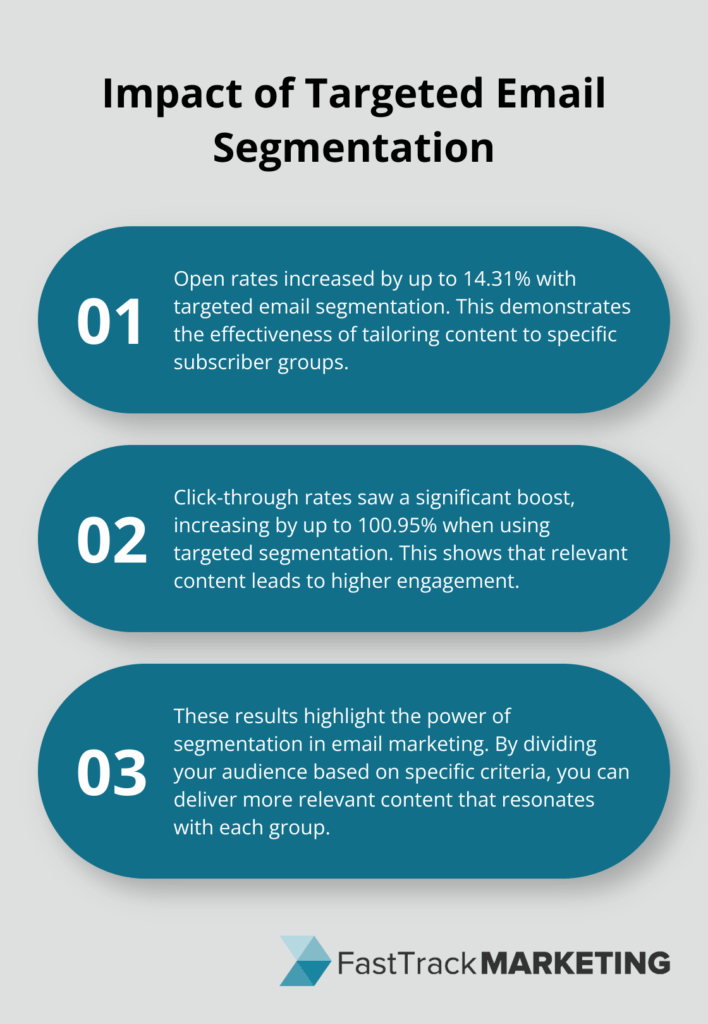
By targeting specific subscriber groups, you can increase open rates by up to 14.31% and click-through rates by 100.95% (Mailchimp, 2017). These numbers highlight the power of tailored messaging.
Use A/B Testing for Continuous Improvement
A/B testing allows you to refine your email strategy based on data, not guesswork. Test elements like:
- Subject lines
- Email content
- Call-to-action buttons
- Send times
A physical therapy clinic might test two different subject lines:
- “5 Exercises to Relieve Back Pain”
- “Say Goodbye to Back Pain with These 5 Moves”
Send each version to a small subset of your list and analyze the results. This method helps you determine which resonates more with your audience and use that insight for future campaigns.
Implement Automation for Timely, Relevant Emails
Email automation ensures your subscribers receive the right message at the right time, without constant manual effort.
Some effective automation sequences for healthcare providers include:
- Welcome series for new subscribers
- Appointment reminders and follow-ups
- Birthday or anniversary messages
- Re-engagement campaigns for inactive subscribers
You should regularly review and update your automated sequences to ensure they remain relevant and effective.
Monitor Key Performance Indicators (KPIs)
To truly optimize your email marketing funnel, you must track and analyze key performance indicators. Some important KPIs to monitor include:
- Open rates
- Click-through rates
- Conversion rates
- Unsubscribe rates
- Revenue per email
These metrics (tracked over time) provide valuable insights into the effectiveness of your email campaigns. They help you identify areas for improvement and make data-driven decisions to enhance your funnel’s performance.
Final Thoughts
An effective email marketing funnel nurtures leads, drives conversions, and fosters long-term patient relationships. Healthcare providers who understand the key stages can craft targeted content that resonates with their audience at every step. Continuous optimization through segmentation, A/B testing, and automation refines your approach based on data and subscriber behavior.
Personalization stands out in crowded inboxes. Tailoring content to individual subscribers’ needs and preferences boosts engagement and builds trust. This customization, combined with timely, relevant messaging, transforms email marketing from a generic broadcast into a valuable, personalized communication channel.
We at Fast Track Marketing understand the unique challenges healthcare providers face in digital marketing. Our marketing solutions help you optimize your email marketing funnel and enhance your online presence. Start optimizing your funnel today and watch your practice grow.